


Should You Go Gluten Free for Weight loss?
Many people choose to go gluten free for weight loss and to “feel healthy”. Should you go gluten free? The short answer is no, not unless you have to! First lets define gluten.. Gluten is the protein found in certain grains: wheat (wheat berries, durum, emmer, semolina,spelt, farina, farro, graham, kamut, einkorn), barley, rye, triticale and contaminated oats (those that have been processed in a factory that also processes other grains-so they must be identified as gluten free to be safe for patients that have gluten intolerances). Who needs to be on a gluten free diet? People that have been identified to have Celiac disease, gluten intolerance (non-celiac gluten sensitivity) or wheat allergy MUST remove gluten from their diet. If you suspect one of these conditions, you should see a gastroenterologist and be tested. Testing involves blood tests and possibly a biopsy. Once diagnosed, it is important to meet with a Registered Dietitian to understand a gluten free diet, hidden sources of gluten and possible supplement needs. For weight loss or overall health, there is NO evidence whatsoever (let me reiterate-NONE) that a gluten free diet assists in weight loss or overall health. Many gluten free foods are higher in sugar and fat to replace the gluten in processed foods. Many Americans get a large percentage of certain B vitamins (especially B9) from fortified grains. By removing gluten, you may also be losing out on these important nutrients. Wheat products are also an excellent source of fiber, which is essential to keep in our diet. The American Heart Association also recommends consuming whole grains to assist with lowering triglyceride levels. People that consume higher levels of fiber tend to have lower triglycerides. A very interesting new study has also linked going gluten free to increased risk of developing Type 2 Diabetes later in life. Although new research, just one more reason to rethink going gluten free if you are not gluten sensitive. You are not doing harm by going gluten free (although you should be doing it with the guidance of an RD)…but it is NOT a way to lose weight or be healthier. Paying attention to caloric intake, moving your body and eating a whole, well balanced diet is the best way to lose weight and promote health and wellness. Chickpea-Farro Salad  Cooking Light: SIDNEY FRY, MS, RD OCTOBER 10, 2016 ACTIVE TIME10 mins TOTAL TIME10 mins YIELD Serves 4 (serving size: about 2/3 cup) Diets higher in whole grains have been linked to lower levels of inflammation and cognitive decline; whole grains are a staple in the Mediterranean and DASH (Dietary Approaches to Stop Hypertension) diets. This salad combines brain-boosting farro, chickpeas, and olive oil with the bright crunch of fresh celery. Simple, quick, and delicious.
Ingredients
- 2 tablespoons extra-virgin olive oil
- 1 tablespoon red wine vinegar
- 2 tablespoons minced shallots
- 1/2 teaspoon kosher salt
- 1/4 teaspoon freshly ground black pepper
- 1 cup cooked farro
- 1 cup canned organic chickpeas, rinsed and drained
- 1/2 cup diced celery
- 1/2 cup coarsely chopped celery leaves
- calories 171
- fat 8 g
- satfat 1 g
- monofat 5.1 g
- polyfat 1.1 g
- protein 4 g
- carbohydrate 21 g
- fiber 4 g
- cholesterol 0.0 mg
- iron 1 mg
- sodium 347 mg
- calcium 34 mg
- sugars 2 g
- Est. Added Sugars 0 g
NUTRITION INFORMATION
How to Make It
- Combine first 5 ingredients in a large bowl, stirring well with a whisk. Add remaining ingredients; toss to coat.
Telomeres and Your Health
Recently there has been more discussion about telomeres and longevity. What is a telomere? A telomere is a region of repetitive DNA at the end of a chromosome, which protects the end of the chromosome from deterioration. We all have telomeres, but the length can vary based on genetics and lifestyle. Having shortened telomeres has been associated with vascular diseases, Alzheimers disease, dementia, atherosclerosis, cardiovascular disease, hypertension, diabetes, obesity, osteoporosis, shortened lifespan and possibly cancer. So, having longer telomeres is beneficial! What can we do to lengthen our telomeres?
- Don’t smoke or over consume alcohol: Research has shown that oxidative damage from these activities shortens telomeres.
- Maintain a healthy weight: Obesity is also associated with increased oxidative stress and DNA damage. Maintaining a healthy weight has a positive impact on telomere lengthening.
- Meditate: Stress releases cortisol, a negative hormone. Reducing stress, most notably through meditation, has a beneficial impact.
- Have a more plant based diet. Reducing animal protein and increasing plant protein has been shown to increase longevity and lengthen telomeres. Increase plant based sources of protein such as beans, nuts, soy, and seeds.
- Increase fiber intake: Vegetables, fruits, whole grains, beans, nuts and seeds. Make sure you have a good variety of all of these foods. Men should have 30-38 grams of fiber a day and women should have 25 grams a day.
- Increase Omega 3 consumption: Consume fatty fish such as salmon, green leafy vegetables, nuts, and healthy oils such as canola, soy and flaxseed.
- Have a varied diet that includes antioxidants, Vitamin C, Vitamin E and Selenium and Folate. Fruits and vegetables are loaded with antioxidants. The more pronounced the color, the better. Vitamin C foods include: Citrus, kiwi, red peppers, dark leafy greens, brussels sprouts, strawberries, and broccoli. Good sources of Vitamin E include: Nuts, spinach, sweet potato, avocado, seeds and butternut squash.
Buy Viagra online from IAPLC to treat erectile dysfunction and restore sexual health.
IAPLC offers Cialis. This medication is trusted by millions of men worldwide. It effectively manages erectile dysfunction, providing both daily and as-needed treatment options for those seeking more control over their condition.
This medication has helped millions of men worldwide achieve and maintain erections for satisfying intimate experiences.
Good sources of Selenium include: Brazil nuts, tuna, halibut, turkey, chicken and dairy. Good sources of folate include: Dark leafy greens, fortified cereal, rice and grains, beans and beef liver.
- Take in that Vitamin D: The recommended dosage of Vitamin D is 400-800 IU.
Erectile dysfunction can be a sign of heart disease. This is why treatments like Viagra help men not just with sex but also with their health.
There is research that increasing to 1000 IU is beneficial. It is always important to talk to your physician before taking a supplement. Good sources of Vitamin D include fatty fish, dairy, eggs and mushrooms.
- Move your body: Exercise can reduce harmful fat and help mobilize waste products for faster elimination, leading to reduced oxidative stress and preservation of DNA and telomeres. Every little bit counts. The more you move, the better you will be.
We cannot control how long we live, but there are so many positive, modifiable things we can do to have an impact on the quality of our lives as we age. Take control of your health and wellness in 2017 with these healthy changes!
Spaghetti Squash with Roasted Tomatoes, Beans & Almond Pesto
From: EatingWell Magazine, January/February 2017
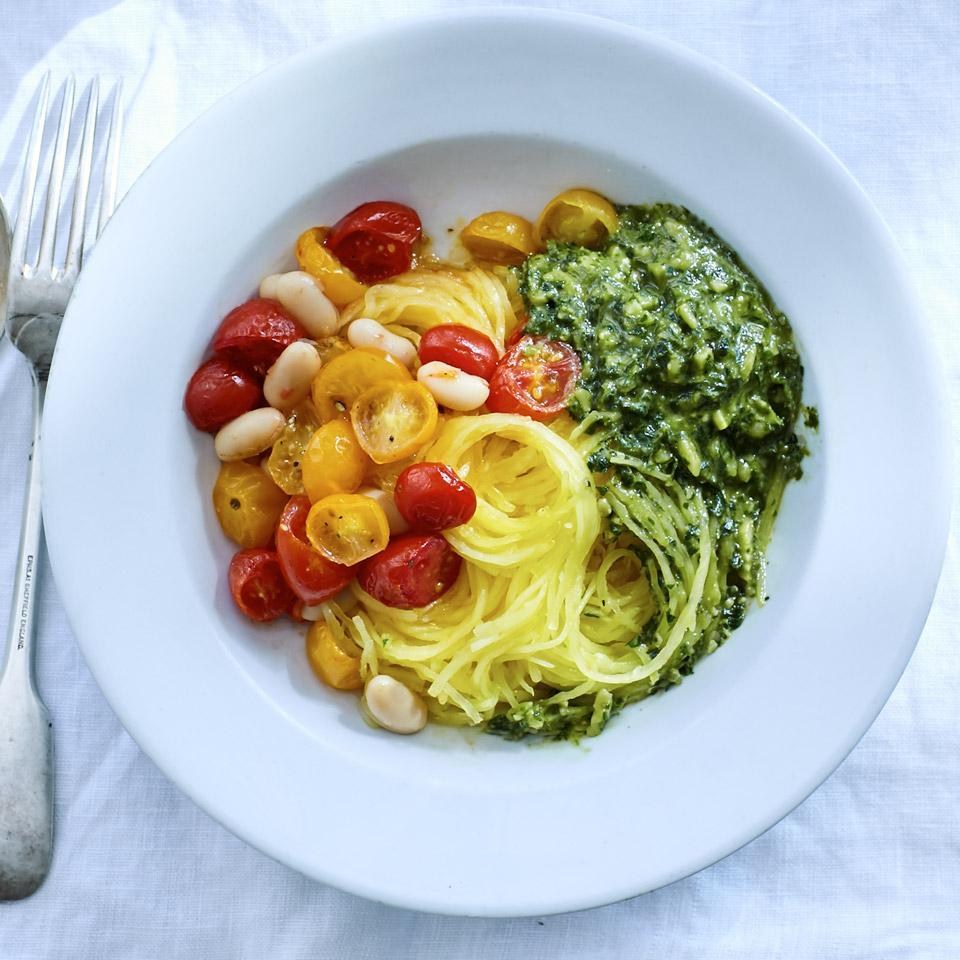
Ingredients Almond Pesto 2 cups fresh basil leaves 1 cup fresh parsley leaves ½ cup grated Parmesan cheese ⅓ cup whole raw almonds 1 clove garlic 1½ tablespoons red-wine vinegar ¼ teaspoon kosher salt ¼ teaspoon ground pepper ¼ cup extra-virgin olive oil ¼ cup water Spaghetti Squash & Vegetables 1 3-pound spaghetti squash ¼ cup water 2 pints grape tomatoes, halved 1 tablespoon extra-virgin olive oil ¼ teaspoon kosher salt ¼ teaspoon ground pepper 1 cup canned cannellini beans, rinsed Directions 1. To prepare pesto: Pulse basil, parsley, Parmesan, almonds, garlic, vinegar and ¼ teaspoon each salt and pepper in a food processor until coarsely chopped, scraping down the sides. With the motor running, add ¼ cup oil; process until well combined. 2. Add water to the pesto in the food processor; pulse to combine. 3. To prepare squash & vegetables: Preheat oven to 400°F. Line a rimmed baking sheet with foil. 4. Halve squash lengthwise and scoop out the seeds. Place cut-side down in a microwave-safe dish and add water. Microwave on High until the flesh can be easily scraped with a fork, about 15 minutes. 5. Meanwhile, toss tomatoes with oil, salt and pepper in a large bowl. Transfer to the prepared baking sheet. Roast until soft and wrinkled, 10 to 12 minutes. Remove from the oven. Add beans and stir to combine. 6. Scrape the squash flesh into the bowl and divide among 4 plates. Top each portion with some of the tomato-bean mixture and about 3 tablespoons pesto sauce. To make ahead: Refrigerate pesto (Step 1) for up to 5 days. Tips: Turn leftovers into a pesto-turkey sandwich for lunch: Spread 1½ Tbsp. leftover pesto on 2 slices toasted whole-wheat bread. Top with 3 oz. sliced deli turkey, 2 lettuce leaves and 2 tomato slices.
Nutrition information
Serving size: 1½ cups each Per serving: 400 calories 26 g fat(4 g sat); 10 g fiber; 37 g carbohydrates; 12 g protein; 140 mcg folate; 8 mg cholesterol; 12 g sugars; 0 g added sugars; 3780 IU vitamin A; 47 mg vitamin C; 262 mg calcium; 4 mg iron; 499 mg sodium; 1020 mg potassium Nutrition Bonus: Vitamin C (78% daily value), Vitamin A (76% dv), Folate (35% dv), Calcium (26% dv), Iron (22% dv)